

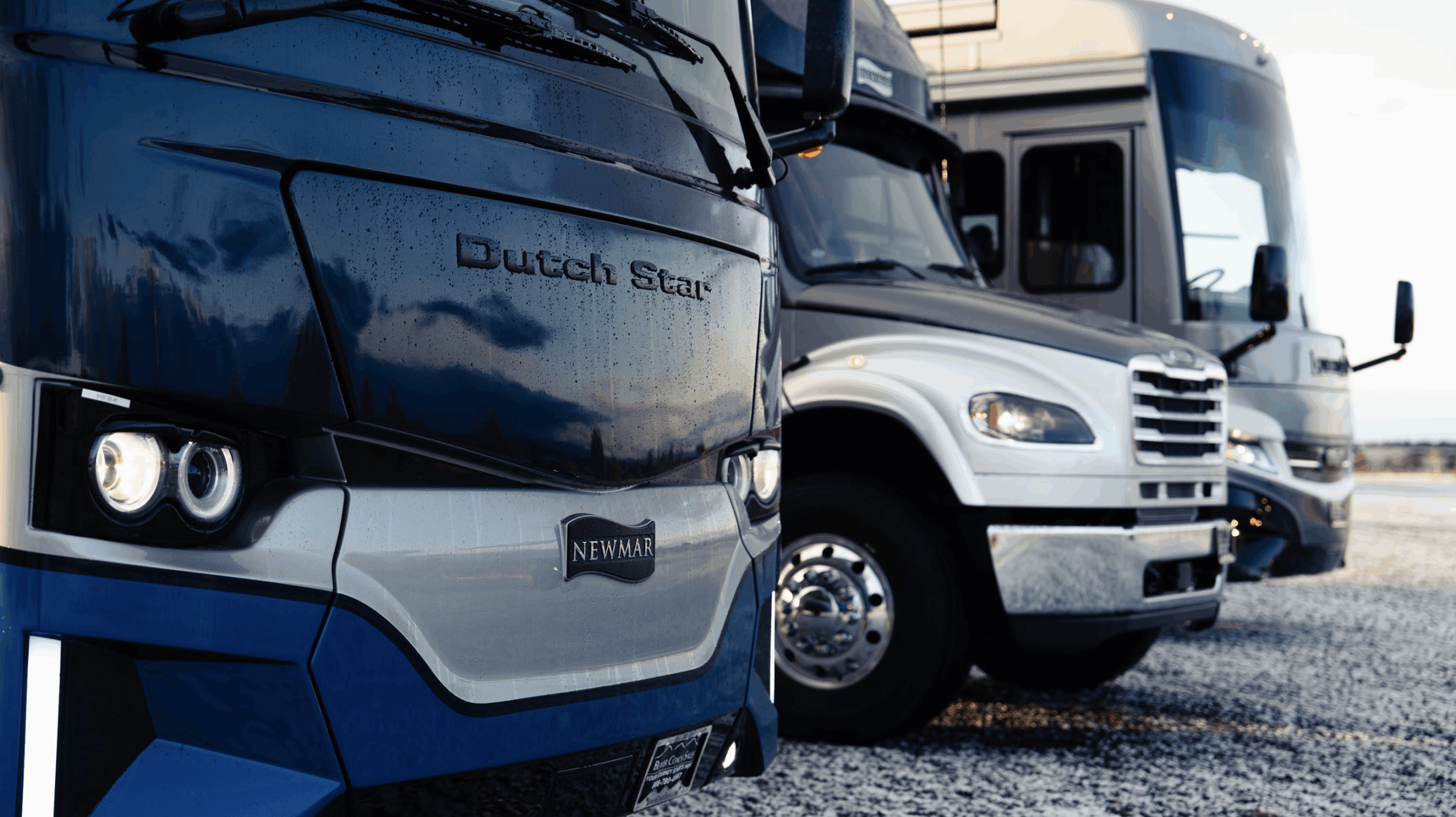
If you’ve spent years on the road, you already know that not all motorhomes deliver the same experience. At a certain point, the question isn’t whether an RV works, it’s whether it still matches the way you travel today. That’s where the diesel pusher vs gas motorhome decision becomes less about specs and more about control, comfort, and confidence behind the wheel.
For seasoned RV owners considering an upgrade, understanding the real-world differences between these two platforms is essential. Below, we break down what actually matters once the honeymoon phase is long over and expectations are higher.
Diesel Pusher vs Gas Motorhome: The Core Difference
The primary difference between a diesel pusher and a gas motorhome comes down to engine placement and performance philosophy.
- Gas motorhomes use a front-mounted gasoline engine, similar to a truck.
- Diesel pushers place a diesel engine in the rear, pushing the coach forward.
That single design change affects ride quality, noise levels, handling, maintenance, and long-term value.
Ride Quality & Driving Experience
Why Diesel Pushers Feel Different
Diesel pushers are engineered for long-distance comfort. With the engine in the rear, drivers experience:
- Less noise and vibration in the cockpit
- Improved weight distribution
- Smoother handling at highway speeds
Many diesel pushers also feature advanced suspension systems and adaptive steering, reducing driver fatigue on long travel days.
Gas Motorhome Driving Characteristics
Gas motorhomes offer a familiar feel and are often easier for first-time owners. However, on extended trips or uneven terrain, drivers may notice:
- More engine noise up front
- Increased road feedback
- Greater effort required in crosswinds or mountain driving
For experienced owners, these differences become more noticeable over time.
Power, Torque, and Towing Confidence
Diesel Pushers
Diesel engines are built for torque. That means:
- Confident hill climbs
- Smoother acceleration under load
- Higher towing capacities for boats, vehicles, or trailers
This matters when travel includes mountain passes, long grades, or heavy towed vehicles.
Gas Motorhomes
Gas engines perform well for lighter loads and shorter trips but may feel strained when fully loaded or towing heavier vehicles, especially in elevation changes.
Interior Comfort & Cabin Noise
One of the most immediately noticeable differences is quiet.
- Diesel pushers deliver a calmer, more refined interior environment.
- Gas motorhomes transmit more engine sound and heat into the living space.
For travelers who value conversation, music, or simply arriving more relaxed, this distinction carries weight.
Longevity & Ownership Perspective
Diesel Pushers as Long-Term Investments
Diesel engines are designed for extended service life. For owners who:
- Travel frequently
- Keep coaches longer
- Value durability
Diesel pushers often retain value better and support longer ownership cycles.
Gas Motorhomes: Practical and Accessible
Gas motorhomes typically cost less upfront and may suit owners who:
- Travel seasonally
- Take shorter trips
- Prefer lower initial investment
They remain a solid option but not always the final destination for seasoned owners.
Maintenance & Service Considerations
Diesel pushers generally require:
- Specialized service facilities
- Fewer but more deliberate maintenance intervals
Gas motorhomes:
- Are serviced more widely
- May require more frequent attention under heavy use
For experienced owners, maintenance becomes less about convenience and more about predictability and trust in service support.
Cost vs Value: Looking Beyond the Price Tag
It’s true—diesel pushers carry a higher upfront cost. But value is measured over time:
- Comfort on long drives
- Reduced fatigue
- Long-term durability
- Resale confidence
For many seasoned RV owners, the diesel pusher is not just an upgrade, it’s an evolution.
Which One Is Right for You?
Choose a gas motorhome if you value:
- Lower entry cost
- Occasional or regional travel
- Familiar driving dynamics
Choose a diesel pusher if you want:
- Superior ride quality
- Long-distance comfort
- Confident towing and handling
- A coach that matches where you are in life now
Conclusion
The diesel pusher vs gas motorhome decision becomes clearer once experience sets the standard. For owners who’ve already logged the miles, the diesel pusher often represents a more refined, capable, and rewarding way to travel without compromise.
When the road is part of the lifestyle, not just the destination, how you get there matters.
Is Newmar worth the upgrade? Click here to read why we think it is! https://www.beavercoachsales.com/newmar-rv/
Winter is here! Click here to learn more about winterizing your RV! https://www.youtube.com/watch?v=pMN4QrPypTQ